
BLOG
Sept. 21st, 2026 - Dear Player Who Keeps Buying Separate Princeton, Deluxe, and Twin Captures
We know what your folder looks like.
One American clean. One American edge-of-breakup. One louder American clean for “just in case.” Three packs, three EQ habits, three cab stories — and somehow the argument never ends, because none of them is the same chassis talking back to you when you flip a switch.
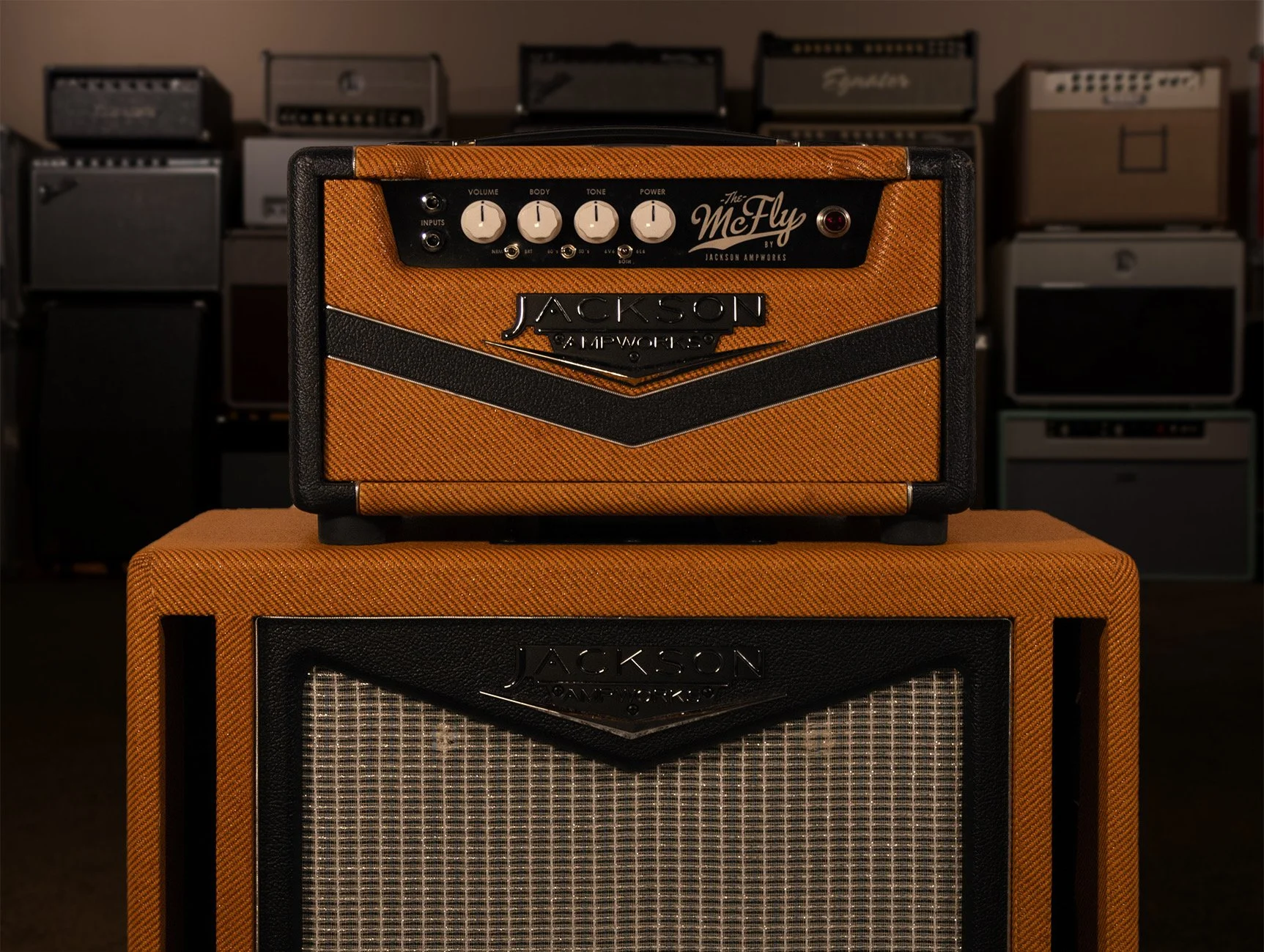
Brad Jackson built the McFly so that argument could happen inside one amp. We captured that chassis so the argument can happen inside your modeler without you owning a Fort Worth head and a road case full of power tubes.
This post is for you.
What Brad was actually trying to fix
Jackson Ampworks is Brad Jackson’s shop out of the Fort Worth / Keller, Texas orbit — boutique builds that went full-time around 2010, with a design streak that prefers short signal paths and heavy iron over nostalgia cosplay.
The McFly was not a Deluxe clone with a marketing sticker. Vintage King documented it as an original circuit that took about eighteen months to land: a nod to early 1950s tweed aggression and 1960s Blackface headroom, without pretending one transformer and one pair of power tubes can honestly do both jobs forever.
The hardware choices are the story:
Two 6SN7s — preamp and phase inverter. Octal tubes with far less gain than a modern 12AX7 stack. That is intentional. The McFly is not a cascading high-gain machine; it is a wide-bandwidth American voice with room to breathe.
Cathode-biased power section with a pair of 6V6s, a pair of 6L6-GCs, and a selector for 6V6 / Both / 6L6. Clean output lands roughly in the 13 / 25 / 46-watt neighborhood; overdriven, reviews put it nearer 18 / 40 / 70.
A six-position Body switch instead of a conventional bass knob — discrete low-frequency voicings you can repeat, not a vague sweep.
A 50s / 60s preamp mode switch, Bright switch, Tone control, and bypassable power scaling down toward bedroom levels.
An over-spec ~200-watt output transformer so the lows and highs do not collapse when the amp gets loud — a deliberate break from vintage iron that “bunches” in the mids under stress.
Guitar.com’s 2015 review caught the practical feel: 6V6s push the midrange and compress; 6L6s open the extremes and hit harder on the transient; Both keeps the bandwidth and fattens the middle. The 50s mode runs a little louder and less scooped; the 60s mode buys cleaner headroom. That is the map we followed when we sat down to capture it.
How we walked the switch matrix (not a preset dump)
Think of our McFly library as a grid, not a mood board.
We treated every meaningful combination of era mode × power-tube setting as its own amp — because on the real head, that is exactly what it is.
60s × 6V6
The “Deluxe at polite volume” lane. Warm cleans, soft compression when you dig in, mid-forward enough that a Tele bridge does not turn into ice. This is where we parked when we wanted Blackface manners without Twin-scale headroom.
60s × 6L6
Same era voicing, bigger lungs. Wider lows, airier top, less sponge. Chords stay percussive. If your gig needs American clean that still reads through a band, this is the corner of the grid.
60s × Both
The hybrid Brad designed on purpose: 6L6 bandwidth with 6V6 mid fat. We captured it because “both” is not a compromise setting on this amp — it is a third voice.
50s × 6V6
Tweed-adjacent aggression in a small footprint. Notes hang longer. Touch becomes the gain control. Edge-of-breakup arrives early; sustain can tip into controlled feedback if you ask for it.
50s × 6L6
Same grit family, more authority and less mid-hump dominance. Rhythm tones that still bark, lead lines that stay thick without needing a boost to feel finished.
50s × Both
Where the grid stops sounding like “pick a Fender era” and starts sounding like this chassis. Full-range, mid-weighted, loud in the room sense even when the capture is sitting at session level.
Across that matrix we kept 34 full amp+cab captures for Quad Cortex, Kemper, and ToneX — the keepers after we threw out the ones that only looked different on a switch label. For players who want to own the cab choice themselves, our DIlibraries are 30 direct captures plus 11 impulse responses of the matching cabinet (Quad Cortex and ToneX).
We did not flatten Body into one “safe” position. The Body switch changes how the amp compresses and how the lows bloom under pick attack; a lazy capture that ignores it will make every McFly sound like a mid-scooped Deluxe with better PR. That is the failure mode unique to this amp — and it is why our pack walks the matrix instead of selling you one heroic “McFly tone.”
Why a McFly capture is easy to get wrong
Most American-classic packs assume a 12AX7 preamp world. The McFly does not live there.
Starve the 6SN7 character into a bright, thin model and you lose the studio-preamp openness Brad built around. Ignore the Body ladder and you either get flubby tweed or sterile Blackface with no middle ground. Capture only the 6L6 side and you miss the mid push that makes the 6V6 and Both settings worth owning. Capture only 50s mode and you erase the headroom half of the design brief.
We built the library the way we play the amp: flip, listen, keep what still feels like air moving in front of a speaker.
Grab the McFly from Alter Amp Works
Live platforms for this pack: Quad Cortex, Kemper, and ToneX. We do not currently list Helix Stadium or NAM for the McFly.
Full amp+cab — $45 · 34 captures / profiles
DI + matching-cab IRs — $45 · 30 directs + 11 IRs
Start here if you are the player this letter was for: load a 60s × Both capture, set your guitar volume at about 7, and play the open chords you usually reserve for “the clean pack.” Then flip to a 50s × 6V6 without changing anything else.
If both still sound like the same head arguing with itself — congratulations. You can delete two of those folders.
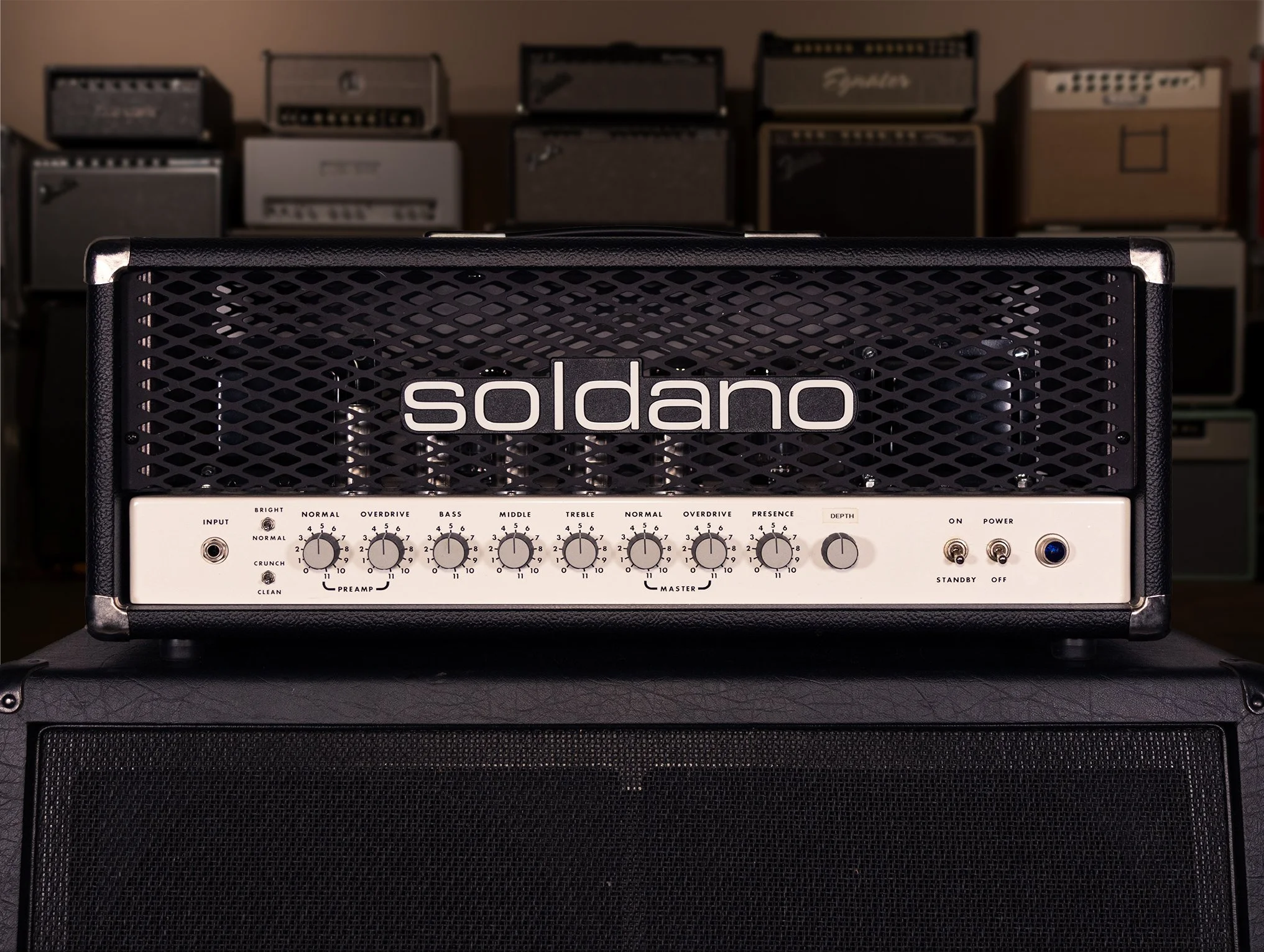
Sept. 18th, 2026 - Soldano SLO-100 Captures: The Amp That Made American High-Gain Articulate
A lot of guitarists already own a piece of the Soldano story without knowing it.
When Eddie Van Halen was tracking For Unlawful Carnal Knowledge, he worked with a Soldano SLO-100. That experience fed the design thinking behind the Peavey 5150 — which means a huge slice of modern American high-gain vocabulary (tight lows, singing harmonics, notes that stay readable under saturation) traces back to Mike Soldano’s cascading-gain blueprint from the late 1980s.
We captured an original hand-wired 1989 SLO-100 from Soldano’s own bench — the rare DeYoung power transformer still in it — so you can hear the parent, not just the descendants.
What Soldano actually fixed
Before the SLO, “more gain” usually meant one of three compromises: a hot-rodded Marshall that got fizzy and mushy, a Mesa Mark that could get aggressive but didn’t feel like this, or a pile of pedals in front of an amp that was never designed for that much preamp distortion.
Soldano’s Super Lead Overdrive 100 put the distortion in a cascading 12AX7 preamp architecture (Guitar World has described five cascading gain stages across five 12AX7s) and paired it with a Western Electric–style 6L6/5881 power section, solid-state rectification, and heavy filtering. Distortion lived upstream of the power amp — so the head could sound present at session volume, not only when the room was already too loud.
Vintage Guitar called it more high-concept modern design than a chrome-plated vintage circuit. That tracks with how it feels under the fingers: American thickness when you want it, Brit-rock crunch when you flip the Normal-side character, and lead sustain that doesn’t smear the pick attack into sludge.
Mike Soldano had been the tech who made other people’s amps meaner. Around 1987 he stopped only modifying chassis and showed the SLO-100 — first to players who heard the prototype (Howard Leese of Heart is part of that early story), then on the NAMM floor after the move to L.A. Hand-built production in Seattle carried the line for decades; in 2018Boutique Amp Distribution bought the company, Soldano stayed on as advisor, and the current SLO-100 Classic keeps the bloodline with later conveniences (Depth, front-panel switching, loop Level).
Our pack is the 1989 hand-wired chapter — DeYoung iron, period switch logic, no “SLO-ish” guesswork.
Walking the front panel (how we captured it)
Think of this less as a preset dump and more as a map of the switches you’d actually use on the head.
Normal / Clean — Rounded, bold cleans. Dig in and they get bigger without turning into ice. This is the channel that surprised a lot of non-metal players into taking the SLO seriously.
Normal / Crunch — Edge-of-breakup into classic-rock grind. Same shared Bass / Mid / Treble / Presence EQ as the rest of the amp, so the crunch still sits in the same tonal family as the clean and the lead.
Overdrive — The cascading-gain lead voice. Saturated, sustained, still articulate. This is the lane that taught a generation what “clear under gain” could mean.
Bright — On for cut and snarl; off for smoother aggression. We captured both, including Crunch + Bright combinations, because that’s how the chassis gets used in the real world — not as isolated museum modes.
We also demo’d the OD channel with and without a mid-forward boost (Tubescreamer-style) in front. The circuit likes that push. It doesn’t need it to work.
Full amp+cab libraries are 38 keepers. DI libraries are 34 direct captures plus our ’90s Mesa 4×12 / UK Celestion Vintage 30 IR pack if you want to own the cab choice in the box.
Names on the guest list (without the fan fiction)
The SLO’s résumé really does split in two — and both sides are documented.
On the hard-rock / metal / shred side: Warren DeMartini, George Lynch, Mick Mars, Matthias Jabs, Whitesnake-era players like Vivian Campbell, Adrian Vandenberg, and Steve Vai, Joe Satriani on The Extremist, and Van Halen’s early-’90s SLO chapter that helped birth the 5150.
On the blues-rock / songwriting side: Eric Clapton in the Journeyman / 24 Nights era, Gary Moore, Warren Haynes (who talked Dickey Betts into trying one), Mark Knopfler, Lou Reed, Prince. Same architecture; different gain and Bright choices.
We’re not going to pretend our specific DeYoung-transformer chassis tracked a named hit. The provenance we claim is the one we can stand behind: Soldano’s bench, 1989, that transformer, these switch captures.
Get the 1989 SLO-100 from Alter Amp Works
Live on our site for this amp: Quad Cortex, Kemper, ToneX only. We don’t currently list Helix Stadium or NAM for the SLO.
Full amp+cab — $45
Quad Cortex SLO 100 — 38 V1 captures; free V2 upgrade when we release it
Kemper SLO 100 — 38 profiles
ToneX SLO 100 — 38 ToneX V2 captures
DI + IRs — $45
QC SLO 100 DI — 34 direct V1 + Mesa V30 4×12 IRs
ToneX SLO 100 DI — 34 direct V2 + same IR pack
Start on Overdrive with Bright off. Play a single-note line. If every note still has edges, you’re hearing why this chassis mattered — and why we bothered to capture it.
Sept. 17th, 2026 - THE HOLY GRAIL: Our 1962 Vox AC30 Copper Panel Captures
Most “AC30” packs on the internet fail in the same way: they nail the ice, miss the body. You get brittle treble, hollow mids, and a tone that sounds like a screenshot of a Vox — not the amp that made British guitar records feel three-dimensional.
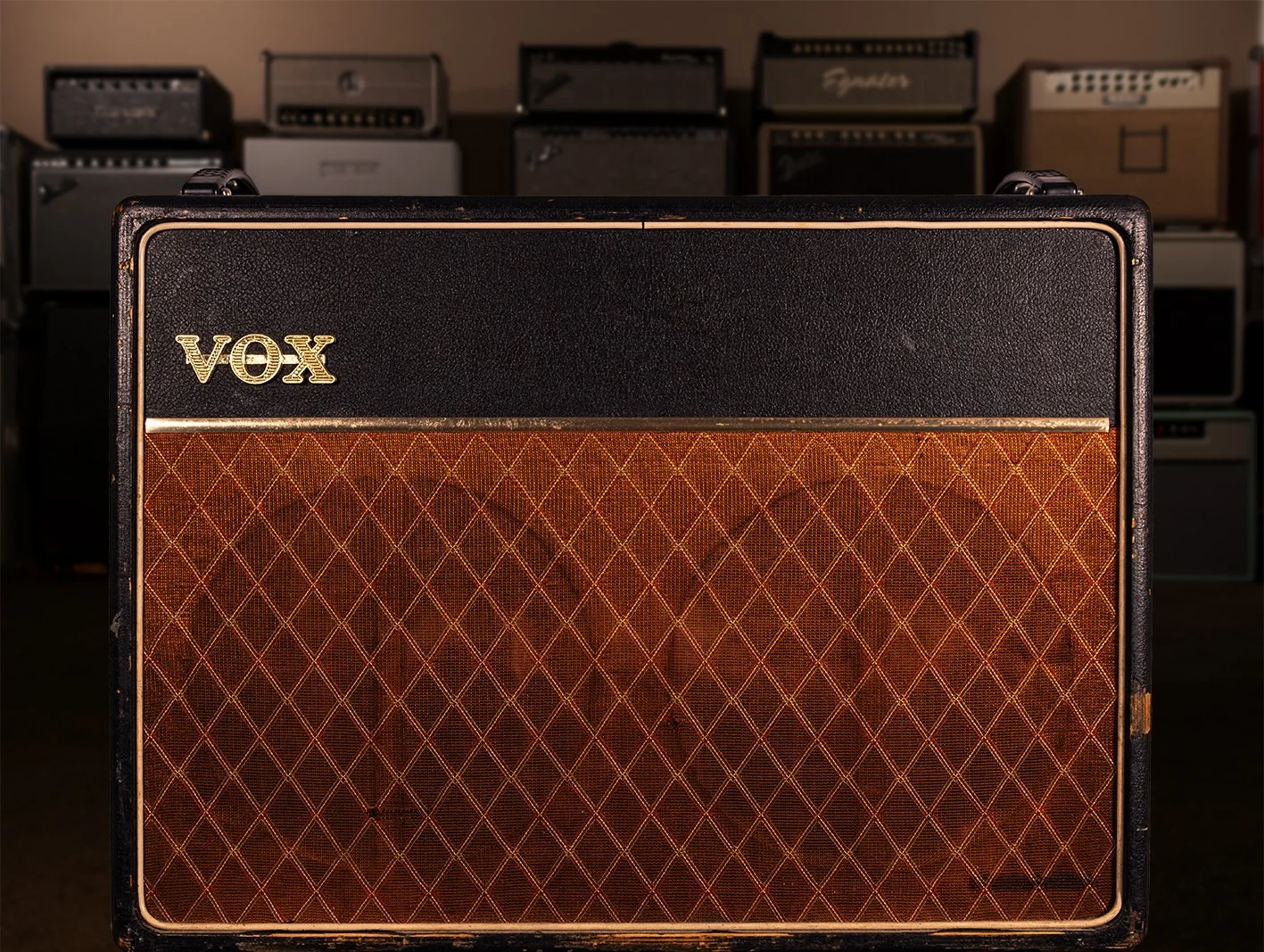
We nicknamed our 1962 Vox AC30 Copper Panel THE HOLY GRAIL on the product page because, after years of capturing boutique and vintage amps, this is still the most quintessentially AC30 sounding example we’ve ever played. Fully original. Factory Top Boost. A pair of the earliest Vox Alnico Silver Bell speakers. The shimmer is there — and so are the lush low-mids that make the treble addictive instead of fatiguing.
If you’ve been hunting that balance on Quad Cortex, Kemper, ToneX, or Helix Stadium, this pack is where we put it.
Shop the pack:
Quad Cortex — $40 — 32 captures (V1 now; free V2 update for every buyer)
Kemper — $40 — 32 profiles
ToneX — $40 — ToneX V2 — 32 captures
Helix Stadium — $40 — 32 Proxy Clones (full amp+cab)
Why copper-panel Top Boost AC30s became mythical
The AC30 wasn’t born as a nostalgia object. It was a working solution.
Tom Jennings and JMI in Dartford, with engineer Dick Denney, built amps for guitarists when U.S. imports were scarce and British rooms were getting louder. Denney’s AC15 set the voice; the AC30 Twin scaled it — more EL84 muscle, a GZ34 rectifier, bigger iron, two 12″ speakers, still cathode-biased and immediate. Early Twins bounced through speaker experiments before Celestion’s alnico “Vox Blue” family became the chime people still chase. Ours came factory-loaded with those early Silver Bells: smooth breakup, compressing highs, dynamics you feel in the fingers.
Then the rooms got bigger still. Players wanted cut without killing the vocal midrange. JMI’s answer was Top Boost — a treble/bass circuit adapted from Bassman-family thinking and tuned for the AC30. Serious amp history (including Dave Hunter’s Vox writing and contemporaneous AC30 timelines) puts Top Boost as a factory modification in late 1961–1962: an extra preamp stage and Treble/Bass controls, often rear-mounted before the circuit moved onto the front panel.
Our amp sits right in that window:
1962 copper panel
Factory-installed Top Boost
Period path with an extra EF86 into the Brilliant channel — shimmer without gutting the warm mids
By 1963, Top Boost became standard on the front panel and Vox moved away from that EF86 arrangement as the design settled
Copper-panel factory Top Boost examples from this stretch are rare for a reason. They’re early enough to feel transitional, and late enough to carry the cut that defined British Invasion guitar records. Hank Marvin and The Shadows helped put Vox on the map; Beatles-era stages and Yardbirds-era firepower made AC30s part of the vocabulary; later players from Brian May and Rory Gallagher to The Edge and Tom Petty/Mike Campbell kept proving the circuit wasn’t a museum piece.
We won’t invent serial-number myths or claim this exact chassis tracked a specific hit. Provenance on our amp is enough: original copper panel, factory Top Boost, earliest Silver Bells — captured by us.
One amp-nerd footnote, because we get asked: people call AC30s “class A.” Technical write-ups (including Randall Aiken’s) put the classic cathode-biased EL84 push-pull stage in class AB territory. Hot-biased, immediate, still the voice you know. The feel matters more than the brochure word.
What makes our capture set different: three cabinets
A single mic’ed Twin snapshot isn’t how we wanted to sell this amp.
We ran the same 1962 copper-panel AC30 through three cabinet configurations so you can choose the AC30 personality your song needs:
Original 2×12 with Alnico Silver Bells — vintage sparkle and warmth; the authentic copper-panel voice
Celestion G12M-25 Greenbacks (6402 cone era) — classic midrange bite and crunch when you want the amp to push harder in a mix
Bad Cat custom Celestions — tight lows, punchy mids, sweet highs; a modern pairing that loves Vox-style preamps
That’s 32 keepers total at $40 per platform — not a dump folder. We trimmed to the captures we actually use: Top Boost brilliance on top, embracing low-mids underneath, no hollow “treble screenshot” syndrome.
On Quad Cortex, the pack ships as V1 today; every purchaser gets the V2 update free when we release it. ToneX is already listed as V2. Helix Stadium gets full amp+cab Proxy Clones. Kemper gets 32 profiles of the same amp-and-cab work.
How this amp wants to be played (and who it’s for)
This isn’t a high-gain wall. It’s dynamic British architecture: cleans that bloom when you dig in, grind that stays musical when you push the volume or a treble booster, and a midrange that sits next to vocals instead of fighting them.
We built the pack for players who:
Write and track indie, Brit-pop, classic rock, worship, or Americana and need chime with body — not ice
Gig or play church and want a consistent Vox voice in in-ears without hauling a fragile 1962 Twin
Already live on a modeler and are tired of “AC30” files that only sound right with a high-cut EQ slapped on afterward
Care that the source is a real factory Top Boost copper-panel with early Silver Bells, not a vague British-chime label
If your whole world is saturated Marshall lead, this isn’t your daily driver — we’ve got other packs for that. If you’ve been chasing the AC30 that feels alive under the fingers, start here.
Grab it on your platform
We only list platforms we actually sell for this amp. Live today: Quad Cortex, Kemper, ToneX, Helix Stadium. We do not currently list NAM for this pack.
PlatformWhat’s in the packLinkQuad Cortex32 captures · $40 · V1 + free future V2QC 62' AC30 Copper PanelKemper32 profiles · $40Kemper 62' AC30 Copper PanelToneX32 captures · $40 · ToneX V2TX - 62' AC30 Copper PanelHelix Stadium32 Proxy Clones · $40 · full amp+cabStadium - 62' AC30 Copper Panel
Browse from alterampworks.com → Products if you want to wander the rest of the catalog after.
One last thing about “owning” a 1962 AC30
A fully original copper-panel Top Boost Twin with early Silver Bells is fragile, loud, valuable, and hard to replace. Most of us who love that sound will never treat one like a daily gig amp — and that’s fine. Modelers exist so the voice can travel even when the furniture stays home.
We captured this one so you can write, rehearse, track, and play with the Top Boost balance we fell for in the room: brilliant on top, lush underneath, three cab lanes when the song asks for a different speaker story.
Load THE HOLY GRAIL. Find the capture that sits. Leave the rest alone.
Get our 1962 Vox AC30 Copper Panel pack: Quad Cortex · Kemper · ToneX · Helix Stadium
Sept. 16th, 2026 - An in-depth Introduction to Alter Amp Works
Guitar tone has never been more portable — or more overwhelming. Between Kemper, Neural DSP Quad Cortex, IK Multimedia ToneX, and a flood of third-party packs, players can spend more time scrolling than strumming. Alter Amp Works was built to change that.
We create professional amp captures and profiles that are studio-ready, live-gig ready, and deliberately curated so you spend less time searching and more time playing.
Who We Are and What We Do
Alter Amp Works was established in 2021 by two long-time friends, Jake and Aaron. Between us, we bring over 20 years of playing and recording experience — and a simple obsession: capturing the sound of great amplifiers the way they actually feel under your fingers.
We specialize in high-quality digital amp captures and profiles for:
Neural DSP Quad Cortex
Kemper Profiler
IK Multimedia ToneX
Line 6 Helix Stadium
Neural Amp Modeler (NAM)
and other capture-compatible platforms
Our packs focus on gear that is cool, unique, and musically useful — then we trim each release down to the best tones only. No filler. No “maybe someday” presets buried in a 100-file folder. Just plug in and play.
That mindset — simplicity — is the core of how we work. Every pack is consolidated so you are not clicking through dozens of files to find one that works. When you open an Alter Amp Works product, you are getting a sound we like, fine-tuned to feel neutral and versatile across styles and genres.
Our Mission: Less Searching. More Playing.
When we looked at the third-party Kemper, Quad Cortex, ToneX, and impulse-response market, we kept running into the same problem players complained about (and we felt ourselves): too many options, not enough keepers.
So our mission is straightforward:
Deliver plug-and-play, professional-quality amp captures that are ready for the studio and the stage — so guitarists can stop staring at a screen and start making music.
That means:
Curating only the strongest captures in each pack
Tuning EQ, definition, and built-in effects toward a balanced, musical starting point
Building products that feel useful the first time you load them
Whether you are tracking at home, rehearsing with a band, or walking onto a stage with a fly rig, the goal is the same: trust the tone and play.
Why This Matters for Guitar Players
Modern guitar playing lives in two worlds at once. Players still chase the feel of great tube amps — the bloom, the compression, the harmonic complexity — but they also need volume control, consistency, and portability that a cranked stack cannot always deliver.
Professional captures sit at that intersection.
Good captures preserve the character of the amp. Dynamics, breakup points, and cab response are not afterthoughts; they are the difference between a “digital approximation” and a tone you will actually use on a record or a gig.
Good captures save time. In a world of endless scrolling, a tight pack of proven tones is worth more than a library you never finish auditioning.
Good captures unlock great gear. Legendary and boutique amplifiers are expensive, rare, or simply impractical to haul. High-quality captures put that DNA into the tools guitarists already use every day — Quad Cortex, Kemper, ToneX, and beyond.
For bedroom producers, touring musicians, worship players, session guitarists, and tone chasers alike, that combination — authenticity plus practicality — is no longer optional. It is how modern guitar tone gets made.
Why Professional-Quality Captures Matter More Than Ever
Not all captures are created equal.
A rushed capture can flatten dynamics, smear the midrange, or leave you fighting the tone instead of playing through it. A professional capture starts with the right amp, the right settings, and a capture process that respects how the amp responds to a real guitar signal — then it is refined until it feels musical out of the box.
In today’s guitar world, that quality bar matters because:
Your amp modeler is often your amp. For many players, captures are the front-of-house and the studio chain. Weak captures mean weak records and weak gigs.
Audiences and sessions expect consistency. Professional captures help you recreate the same voice night after night and session after session.
Great tone should not require a scavenger hunt. Players deserve packs that are curated, not cluttered — tones you can trust without endless A/B testing.
Official, licensed captures protect authenticity. When an amp builder stands behind the digital version of their circuit, you are closer to the real instrument — not a vague imitation.
That is the standard we hold ourselves to at Alter Amp Works: captures that sound like the amp, feel like the amp, and stay useful long after the novelty of “another pack” wears off.
Our Partnership with Bad Cat Amps
We are incredibly proud to partner with Bad Cat Amplifiers — bringing official, licensed captures and profiles of one of the world’s finest amp lines into the digital world.
For decades, Bad Cat has set a high bar for tone, craftsmanship, and musical feel. From Sampson-era classics to modern handwired and Mod Shop designs, Bad Cat amps have earned their reputation among players who care about touch-sensitive cleans, singing overdrive, and amplifiers with a real voice.
Bad Cat has partnered with Alter Amp Works to create faithful digital captures of their amp lineup — so guitarists can experience authentic Bad Cat tone wherever they play, without mic’ing guesswork or hauling a full backline.
That partnership means:
Officially licensed and endorsed Bad Cat captures for Quad Cortex, Kemper, and ToneX
Coverage across flagship and heritage models — including icons like the Black Cat lineage, Cub series, Hot Cat, Era 30, Jet Black, Lynx, and more
Suite options like The Big Cat, our all-in-one Bad Cat collection with free lifetime updates as the official lineup grows
A commitment to the Bad Cat legacy, including support tied to the memory of Mark Sampson
You can explore the full official Bad Cat catalog on our site at Bad Cat Official, and Bad Cat highlights the partnership on their own Digital Captures page.
If you have always wanted Bad Cat tone in a modern capture-based rig, this is the most direct path: the amps, captured with care, backed by the manufacturer.
Built for How Guitarists Actually Work
Alter Amp Works products are designed around real workflows:
Studio tracking — load a capture and print tones that sit in a mix without endless mic repositioning
Live and rehearsal — consistent volume and feel, night after night
Hybrid setups — DI capture packs and amp+cab options where available, so you can match how you actually run your board
Platform choice — the same philosophy across Quad Cortex, Kemper, ToneX, and Helix Stadium so you are not locked into one ecosystem to get great amp tones.
Start Here
If you are new to Alter Amp Works, here is the simplest path:
Read more about our story on Who We Are
Explore the ever growing amp collection - click on “products” and select your platform - don’t forget to checkout the Bad Cat Official page.
Browse Quad Cortex, Kemper, ToneX, Helix Stadium, and NAM packs - Each amp pack has an audio demo you can listen to to get a feel for what the pack has to offer.
For the full Alter Amp Works experience in one place, check out our massive bundle collections MAMMOTH, MAMMOTH II, and THE BIG CAT.
Great guitar tone should feel inevitable — not like a research project. That is what we are here for.
Alter Amp Works. Professional amp captures for players who would rather play than dig.
Questions? Reach us at alterampworks@gmail.com